
How to Advertise New Products & Services: Strategies That Work
Launching a new product or service requires more than hope—it demands proven strategies that cut through the noise and drive real results. This guide compiles 22 actionable approaches backed by insights from marketing experts who have successfully introduced innovations to the market. Each strategy addresses specific challenges, from building credibility and sparking initial interest to converting skeptics and scaling reach across multiple channels.
Lead With Pain Points
One example of how we used advertising to promote a new service was when we launched our fully digital, remote car inspection for full-coverage policies.
It was a big shift in the market because people were used to driving somewhere, waiting in line, and dealing with paperwork. So the challenge wasn't just awareness, it was rebuilding the story around how the process worked.
The strategy that worked best was leading with the pain point, not the feature. Instead of saying "new remote inspection," our ads focused on what people actually care about:
- "No driving to an inspection center."
- "No paperwork."
- "Get full coverage entirely online, in minutes."
We paired that with short videos showing the step-by-step process on a phone. Once people saw how simple it was, the conversion rates jumped.
We also segmented campaigns by intent. Full-coverage buyers usually have a higher CAC, so we ran small tests first, watched the numbers closely, and only scaled the ads once CAC dropped below our margins. That's our rule for everything, test small, scale only when the economics work.
What made it effective was keeping the message insanely clear, we removed the hassle, not just added a new feature. It positioned us differently from traditional brokers and drove a meaningful increase in full-coverage purchases right after launch.
Spark Buzz With Failure
When I launched a web design service, I did something most people would think was backwards. I created a deliberately bad landing page and posted it on Reddit with the title "Roast my terrible web design so I know what NOT to do for clients." The page had every amateur mistake you could imagine: auto-playing music, three different fonts, a spinning logo. Reddit tore it apart, exactly as planned. But here's what happened. The comment section became a masterclass in what actually matters for conversion, and I was in there actively asking follow-up questions and taking notes publicly.
People started checking my actual portfolio out of curiosity to see if I was seriously that bad or if this was intentional. Traffic spiked because the post hit the front page of two design subreddits. I got six client inquiries within 48 hours, all mentioning they appreciated how I engaged with criticism. The strategy was using intentional failure as content. It gave people something to react to and positioned me as someone willing to learn publicly, which built way more trust than any polished case study ever could have.

Show Transformation With Precision
One launch that stands out is when I used a value-led advertising approach to introduce a new product. Instead of pushing features, we centred the campaign on the specific problems customers were struggling with and positioned the product as a direct path to relief. The ads were simple, emotionally grounded, and built around short narrative arcs that mirrored real user scenarios. That structure helped people see themselves in the message, which drove high engagement before we even introduced the offer.
What made the strategy effective was pairing this storytelling with rapid experimentation. We tested variations in framing, pacing, and call-to-action language to identify the combinations that moved people from curiosity to intent. The best-performing creatives always shared the same trait: clarity. When the audience immediately understood the outcome the product enabled for them, conversion rates lifted and cost per acquisition dropped.
The experience reinforced that advertising works best when it shows transformation, not just capability. If people can feel the shift your product creates in their life or work, they don't need a long explanation. They lean in because the promise is relevant, believable, and delivered in a way that respects their attention.

Drive Engagement Through Interactive Incentives
In Cafely's early days, we set up a stall at a local coffee fest with free sample packs and a QR-linked What Coffee Are You? quiz that required an Instagram follow to unlock results and a 10% discount usable onsite or online. We encouraged sharing with the #Cafely hashtag and our team personally responded to every post, boosting engagement and discovery. The most effective elements were the interactive quiz tied to a clear incentive and the exclusive bundled discounts with free shipping that turned interest into orders.

Prioritize Clear Actionable Guidance
We shape advertising around clarity because busy professionals look for quick insights. When we share new material, we keep the message simple and actionable so the audience feels supported. This approach helps people stay focused without feeling overwhelmed. We used this strategy when we promoted a short data literacy guide for teams that wanted a clear starting point.
We placed ads near analytics discussions where people often search for direction during their daily work. The message shared an example of one team that used the guide to interpret engagement trends. This gave the audience helpful context and showed how the material could support real decisions. The focused message created stronger interest and improved click through rates across the campaign.

Scale Traffic With YouTube Videos
To promote a new offering, I created YouTube videos and sent the raw footage to freelancers for editing. The videos generated thousands of views and significant traffic, which we tracked through Google Analytics, making this approach the most effective.

Win Credibility Through Industry PR
I just completed a book this week entitled "Scuba Storyteller: Mostly Humorous Diving Tales of an Addicted AquaNut". Since it contains 65 stories aimed at both divers and non-divers, I took a broad approach to promoting it.
First, I created a standalone website for my book: https://scubastoryteller.com/ with the cover art, excerpts from the Foreword, preliminary reviews, my bio, a content overview, and how to order.
Second, I shared my manuscript with over 30 prominent diving industry authors and non-diving authors in advance of publication to preview the book and write some preliminary reviews: https://scubastoryteller.com/reviews/.
Third, I used public relations to promote the press release about the book on several diving industry websites that will reach over 50,000 diving enthusiasts. I also sent the press release to the author of the book's Foreword, who publishes a trade magazine, and he kindly promoted it, too, as did the publishing company. Here's one of them: https://www.thescubanews.com/2025/12/18/best-publishing-to-distribute-scuba-storyteller-mostly-humorous-diving-tales-by-an-addicted-aquanut-by-gil-zeimer/
Fourth, I used email marketing to reach out to a bunch of California, Illinois, and Arizona dive clubs to tell them about the book.
And fifth, I posted a summary of the press release and the beautifully designed front/back cover artwork on Facebook groups that had tens of thousands of dedicated divers.
Among all of these strategies, public relations got the most bang for the buck, since the other methodologies were sweat equity, but it's too early to tell what drove the most sales since the book just went on Amazon this week.

Feature Authentic Customer Testimonials
I'd say our most effective approach involved using VIDEO TESTIMONIALS FROM BETA CUSTOMERS in targeted Facebook and LinkedIn ads instead of creating polished promotional content explaining our new reputation management service. Real customer stories outperformed our professional ad creative by massive margins.
We offered our reputation management service to five existing clients at discounted rates in exchange for video testimonials after 90 days. Their authentic stories about review increases and customer feedback improvements became our primary ad creative. These testimonial ads generated leads at $87 each compared to $264 per lead from our agency-created promotional videos explaining service features.
The testimonial campaign produced 127 qualified leads over four months with a 34% consultation-to-client conversion rate. What made this work was specificity - one restaurant owner mentioned increasing Google reviews from 23 to 147 in six months, which resonated far more than our claims about "improving online reputation."
Authentic customer voices beat polished marketing messages because prospects trust peer experiences over company promises. The best advertising for new services comes from customers explaining why they bought, not agencies explaining why prospects should buy.

Localize With Trusted Regional Influencers
With the introduction of our new product, we took the opportunity to launch it through a multi faceted approach using social media to reach different territories around the world. This included creating region specific advertisements and collaborating with local influencers from within each of the major cultural markets.
Each geographical region was provided with localized promotional content, including the correct language, images, and culture specific references, to maximise customer engagement in that area. Additionally, region-specific hashtags helped facilitate organic conversation about the product and made it easier for consumers to discover the product.
The two main drivers of success for this launch programme were the influencer-created content and locally created graphic assets. These two elements played a major role in generating credibility and driving engagement among all the targeted audiences.

Target Intent And Nurture Persistence
When we launched Fulfill.com's marketplace platform, I learned that the most effective advertising isn't about shouting the loudest, it's about meeting your audience exactly where they're searching for solutions. We focused our entire strategy on intent-based marketing, and it transformed our growth trajectory.
The biggest breakthrough came from creating content that solved specific pain points before pitching our solution. I invested heavily in SEO-driven content answering questions like "how to choose a 3PL" and "what does fulfillment cost." We weren't selling in these pieces, we were genuinely helping e-commerce brands navigate complex logistics decisions. This approach generated qualified leads at one-fifth the cost of our paid advertising because people found us when they actually needed help, not when we interrupted them.
For paid channels, I abandoned broad targeting immediately. Instead of advertising to "e-commerce businesses," we created hyper-specific campaigns targeting brands at inflection points, like those scaling from 100 to 500 orders daily or expanding to multi-channel fulfillment. We built landing pages addressing each specific scenario with real cost comparisons and case studies from our network. Our conversion rates jumped 340 percent when we made this shift.
The strategy that surprised me most was leveraging our existing network. We created a partner referral program where the 3PLs in our marketplace could recommend us to brands that weren't the right fit for them directly. This turned our partners into our sales force. It cost us almost nothing in advertising dollars but generated our highest-quality leads because they came with built-in trust.
I also learned that retargeting is where you win or lose. Most brands give up after one or two touches, but in logistics, the buying cycle is long. We built a 90-day nurture sequence with educational content, customer stories, and ROI calculators. The majority of our conversions happened between day 45 and day 75, which we would have completely missed with a shorter approach.
One tactical move that paid off was sponsoring industry podcasts and newsletters read by our exact audience, DTC brand founders and operations managers. The credibility boost from these trusted sources was worth far more than the reach numbers suggested.
The lesson from launching Fulfill.

Address Real Gaps With Simplicity
When we promoted a new market entry our first step was to study the gaps people were already discussing. This helped us shape an advertising message that spoke to a real need instead of chasing artificial demand. We tested light creative formats to observe which ideas sparked the most curiosity. Each insight guided the next stage and allowed the campaign to grow in a clear and confident direction.
The strategy that proved most effective was keeping the message simple. People engaged more when the communication respected their time and offered clear value. We focused on building recognition through steady touchpoints that felt natural across the customer journey. This consistent flow helped the brand gain early traction and supported a strong position in a competitive space.

Bridge Offline Moments To Online Conversions
We ran local sponsorships with a zoo and an ice hockey team and then amplified those moments online through social media and newsletters. The most effective strategy was sharing photos and short stories from the events and linking each mention back to our digital funnel. This bridged offline excitement with online engagement and guided audiences into our digital funnel.

Teach First Retarget Warm Prospects
What worked surprisingly well was launching our LOCAL SEO AUDIT SERVICE through educational content instead of traditional paid advertising. We created a detailed guide explaining what local SEO audits reveal, published it six weeks before offering the paid service, then retargeted readers with service launch ads.
The pre-launch content attracted 2,340 readers who downloaded our audit checklist. When we launched paid audit services and ran retargeting ads to that audience, conversion rates hit 11.3% compared to 2.1% from cold traffic ads. The educational approach cost us $890 in content production and $430 in retargeting spend, generating 264 audit requests worth $52,800 in initial revenue.
What surprised me was that warm audience ads required 67% lower cost-per-click because we targeted engaged prospects instead of interrupting cold audiences. The content investment felt risky initially, but pre-educating prospects created purchase intent that made advertising dramatically more effective.
The strategy works because people buy services after understanding why they need them. Advertising to cold audiences wastes budget educating skeptics, while retargeting educated prospects converts people already recognizing their problem.

Visualize Hidden Risk To Reframe Value
We used advertising to promote our new Drone Thermal Imaging Audit service. The conflict was the trade-off: traditional advertising sells the finished product, which creates a massive structural failure by failing to justify the cost of the diagnostic service itself. We needed to prove the necessity of paying for diagnostics before paying for the actual heavy duty repair.
The most effective strategy was Structural Risk Visualization. Our advertising did not show a picture of the drone; it showed split-screen video footage. One side showed a roof that looked visually perfect (the client's current perception). The other side showed the thermal image from the drone (the verifiable structural reality), revealing massive, hidden moisture pockets and heat loss. We traded abstract technical language for clear, hands-on proof of hidden risk.
This strategy worked because it immediately converted the diagnostic service from an optional cost into a non-negotiable structural necessity. The ad copy focused on quantifying the financial disaster the client would avoid by finding the hidden rot now. We shifted the client's mindset from aesthetic concern to verifiable risk elimination. The best advertising strategy is to be a person who is committed to a simple, hands-on solution that prioritizes visualizing the verifiable structural liability the new service eliminates.

Invite Skepticism And Prove Durability
The most effective advertising campaign we ran for a new product was based on demanding customer skepticism, not blind enthusiasm. We launched a high-end, durable piece of apparel that was priced far above the competition. The challenge was getting people to believe the quality was worth the massive financial leap.
The strategy that proved most effective was the "Prove Us Wrong" campaign. The ad copy didn't sell the features; it sold the failure point. We explicitly stated: "This fabric is guaranteed for 5 years. Here are the three reasons we expect you to try and break it." The campaign drove traffic not to the product page, but to a dedicated quality control page showing unedited video footage of our stress tests.
This worked because it completely disarmed the customer's anxiety about quality. By inviting skepticism and providing verifiable, transparent proof of competence, we earned trust faster than any traditional, flowery ad could. It proved that in today's market, the best advertising doesn't sell the fantasy; it sells the integrity of the operational process.
Favor Advertorials Over Static Ads
Hello,
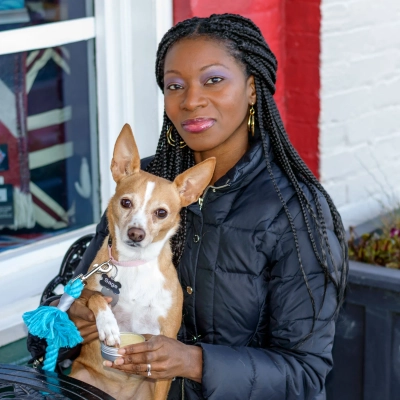
My name is Chloe. I came across your Featured.com request for businesses to share their most effective advertising strategies for products or services.
I own a pet wellness brand and regularly run advertisements, both ads and advertorials, in national and regional pet magazines. Through consistent testing, I've found that advertorials in print magazines, digital editions, website articles, and e-newsletters perform significantly better for my company than traditional static ads or social media ads.
Advertorials can take many forms, including listicles, editor's picks, staff picks, product guides, holiday gift guides, and seasonal roundups. These formats are highly effective because they appear as curated content from a trusted industry authority. Readers view them as credible recommendations rather than standard advertising, which increases engagement and buyer intent.
Each time an advertorial campaign launches, I see a direct increase in sales on my website. Nearly half of our customers report discovering us through Modern Dog Magazine or Houston Pet Talk Magazine, and the products featured in those advertorials are typically the first to sell once the campaign goes live. Customers often add other items to their order, making the exposure even more valuable.
This approach has consistently outperformed social media advertising for my brand. While social ads generated traffic, the conversion rate was essentially zero. Advertorials, on the other hand, effectively reach active buyers, customers in the research phase, and our ideal target market, making them the most reliable and profitable advertising strategy for my business.
About the brand: Founded in 2016 and based in Norcross, Georgia, Simply Sage Dog Treats creates small-batch, preservative-free pet skincare and grooming essentials for dogs and cats with allergies and skin issues. Our product line includes paw, nose, and skin balms, itch-relief shampoo bars, and soothing paw soaks, made with minimal ingredients and focused on safe, effective relief for pets.
Segment Audiences And Optimize Relentlessly
AutogenAI is a strong example of how we've used paid advertising to successfully promote a new product in a competitive market. As a generative AI platform entering the U.S., AutogenAI needed help building trust quickly while managing a complex buying cycle and diverse audience segments. Our answer was a multi-channel strategy across Google PPC and LinkedIn that focused on high-intent keywords, targeted decision makers, used clear value-driven messaging tailored to each audience.
The most effective strategies were audience segmentation, continuous A/B testing, and retargeting with educational content to support longer decision journeys. After we optimized campaigns with real-time performance data, we reduced CPA by up to 68%, increased leads by 48%, and grew the customer pipeline by over 60%. Treating advertising as a full-funnel growth driver made all the difference.

Deliver Relief Through Local Hazard Education
We recently promoted our "Comfy Club" maintenance plan—it's not a physical product, but an essential service package. Instead of running a typical ad promising savings, our strategy was to use advertising to promote a specific, local pain point that our San Antonio customers were already experiencing, and then introduce the Comfy Club as the permanent solution. The advertising wasn't about the plan itself; it was about the relief we offer.
Our most effective strategy was running short, hyper-local video ads right before the intense heat waves hit. The content was simple: a technician showing a failed capacitor—a tiny, inexpensive part—and explaining that this small failure could lead to thousands of dollars in compressor damage if not caught early. We positioned the Comfy Club not as a recurring fee, but as "AC Failure Insurance" and "Peace of Mind." This targeted education showed immediate value by connecting a frightening risk to an easy preventative action.
The key lesson we learned is that effective advertising doesn't sell a service; it sells the avoidance of pain. The strategy of showing a small, relatable problem and then presenting the maintenance plan as the guaranteed way to escape that disaster generated the best response. It proved that in the service business, customers respond much better to a promise of reliability and security than they do to vague discounts.

Unify Message Across Every Buyer Channel
When we launch a new product or service, the most effective approach has been to assume the customer may never follow a neat funnel, so we "be everywhere" they look.
For one client rolling out a new service, we started with SEO to build pages that answered the exact questions people were Googling, then layered SEM on top to capture that intent quickly with tightly themed search campaigns.
At the same time we ran Facebook and Instagram ads to seed demand and retarget site visitors with simple, benefit-led creatives.
Because it was ecommerce, we also used Shopify ads and product feeds so the offer followed people into their shopping environments.
Radio gave us broad local reach and a memorable tagline that matched the wording in our search and social ads, so everything felt joined up. The real win was consistency and measurement: one core message, repeated across channels, and clear tracking so we could see which touchpoints actually drove add-to-carts, calls and bookings.
this was in the car service/sales industry.
Pair Partnerships With Powerful Social Proof
When we launched our new corporate and luxury airport transfer services at LB Limousine, Inc., we focused on reaching both individual and business clients in a highly targeted way. We started with digital campaigns on Google and social media, using ads that highlighted our reliability, professionalism, and premium experience. But the most effective strategy ended up being a combination of local partnerships and word-of-mouth promotion. We collaborated with top hotels, travel agencies, and event planners to ensure our services were recommended to their clients.
Simultaneously, we encouraged satisfied customers to leave reviews and share their experiences on platforms like Yelp and Google, which significantly increased our credibility. This mix of paid advertising, partnerships, and social proof helped us not only drive immediate bookings but also establish long-term trust with clients who continue to rely on LB Limousine for all their transportation needs.
Combine Contextual Reach With Focused Follow Up
Each month here at Gourmet Ads, we run 1000s of ad campaigns for brands launching new products or services, some in pretty cutthroat markets. One tactic keeps coming back to us and gets shared with every new client: a straightforward, two-step inbound funnel that closely mirrors how people actually go about discovering, researching and converting online.
A recent advertising campaign we ran is a good example of this. The advertiser launched a small kitchen gadget, a vacuum sealer, aimed at households cooks that want to maximize shelf life for foods. Let me share with you how we approached this advertiser.
Step 1 Awareness
We kick off with two separate ad buys in the ad server, backed up by a clear awareness objective. The first buy was wide in scope but still super relevant. We targeted food and recipe content to get scale and make sure the ads were showing up in places that made commercial sense. The second buy took a more focused approach : we targeted content around Sous Vide, which is right in line with the vacuum sealer's main use case and what our target audience is actually searching for. Both had a 70% viewability requirement also. Across this stage, we ran a mix of ads including banners, display, native and video with a simple goal: get in front of people who are already looking at recipes online. By aligning with food content, engagement is stronger.
Step 2 Conversions.
f people landed on our page but still didn't sign up to buy, we added them to a retargeting pool and shifted our messaging so that it was about reassuring people that the product is the real deal. Our creative focused on how the product can make life easier and showing them all the nifty features that would seal the deal (literally). Because we know these people have already shown some interest, retargeting can be kept in check and controlled and it delivers strong results without annoying people with too many ads.
So what makes this approach work? Category and contextual targeting gives us the right scale to fill that top of the funnel, while retargeting backs it all up - we don't lose interest in people and our performance isn't muddled by trying to talk to people who might not even be interested. Pretty straightforward and it consistently delivers results when we use this tactic.
This two-step framework is something we sit down and walk through with every new Gourmet Ads client. It's simple, it works, and it's effective.

Maintain Multi Layer Presence For Shoppers
At The Bag Icon we launch new handbags each month, with each launch requiring a robust marketing plan. We utilize a multi-layered marketing approach, that includes email marketing, social media marketing, paid Instagram, Google and Facebook Ads, as well as magazine advertorials. The multi-layered approach ensures we have a presence in all the places our customers consuming content. In addition, this approach is effective at engaging with both current customers who are aware of our brand and potential customers who we need to reach.