
Using Social Proof in Advertising: Real Business Examples
Social proof has become one of the most powerful tools in modern advertising, transforming skeptical browsers into confident buyers. This article examines fourteen proven tactics that real businesses use to build trust and drive conversions, featuring insights from marketing professionals who have implemented these strategies successfully. From live activity notifications to verified customer reviews, these examples demonstrate how authentic evidence of customer satisfaction can significantly impact advertising performance.
Display Live Buyer Activity
Social proof has been one of the most effective elements in our advertising, especially because we operate in Latin America, a region where trust is low and people are naturally skeptical of buying insurance online. One of the biggest wins for us was running campaigns that highlighted real customer activity on our platform.
Instead of generic testimonials, we showed actual proof of people buying policies: how many customers purchased that week, screenshots of real feedback, and short clips of users explaining their experience. It wasn't polished or overly produced, it was real.
Those ads performed incredibly well. Just adding social validation increased conversions by around 20% and almost doubled the number of direct searches for our brand on Google. People saw others using the product and immediately felt safer trying it themselves.
So the type of social proof that worked best wasn't celebrity endorsements or long stories, it was real, everyday customers validating that the product works. In a low-trust market, showing genuine user behavior is far more powerful than anything we can say about ourselves.
Feature Verified Results and Names
The effective approach includes specific customer testimonials featuring real people and tangible results.
Example: ad campaign for a project management app.
Ineffective Ad: Boost Productivity Now, Get Booster
Effective Ad (Social Proof): A video or image ad features a verified user
Visuals: A user smiles, interacting with the clean user interface
Quote/Headline: We reduced project turnaround time after switching to this tool.
Reasons:
Specificity: It provides a measurable outcome otherthan a vague claim.
Relatability: The target audience identified with the user.
Authenticity: Use a real person's name, location and title to create trust.
The result-oriented customer testimonials were the most effective type of social proof.

Pair Peer Voices with Expert Endorsements
Social proof has become one of our most reliable tools, and the campaigns that perform best are the ones where we combine two voices: everyday boat owners and respected professional captains. Different buyers look for different types of reassurance: recreational boaters want to hear from people who use the product the same way they do, while more serious operators pay close attention to what the pros think.
One recent example was a campaign for a marine electronics brand. We led with a simple, authentic testimonial from a longtime boat owner about how the product made his time on the water easier. Then we followed it with a short endorsement from a professional captain explaining why he trusts the same product in tougher, real-world conditions. That pairing outperformed anything we'd run before.
In general, expert testimonials tend to carry the most weight, but the mix of 'someone like me' and 'someone who really knows their craft' has been the most effective at moving people from interest to action.

Leverage Unedited Emails for Credibility
One example that worked well for us was using screenshots of real client emails instead of testimonials written for ads. We noticed that when we asked clients for reviews, their responses felt forced and didn't resonate. But when we pulled short lines from emails clients had already sent, people paid attention.
We used those exact words in ads, with minimal editing, and didn't even show logos or headshots. Just the message and a short line explaining what it was about. Those ads consistently got more comments and saves than our polished testimonial ads.
What made this type of social proof work was that it didn't feel like advertising. It felt like overhearing someone else's experience. We measured success by how often people replied or asked follow-up questions, not just clicks.
So, the most effective social proof isn't the most impressive; it's the most believable.

Promote Association Logos and CE Credits
We host pickleball events for benefits brokers. To promote the event, we partner with associations, NAIFA and NABIP. We also get the events approved for Continuing Education - which is a big deal for brokers who need CE Credits to keep their licenses. We advertise the association logos on the promotions. This helps align our brand with the association - it is a great credibility booster. When we put the CE-approved notification on the ads, it is even better. Some people come to the events for the CE credits, other people who are members of the association come to the event because they like pickleball. Everyone benefits.

Position Hard Evidence beside the CTA
At Scale by SEO, social proof works best when it reduces doubt at the exact moment hesitation shows up. A strong example came from running ads to a service page that already converted well organically but stalled under paid traffic. Instead of adding more copy, a single proof element was placed directly under the primary call to action. It highlighted a short client outcome with a clear metric and no embellishment. The rest of the page stayed untouched. That small change shifted behavior quickly. Click through rates held steady, but form completion increased by 26 percent over four weeks. The proof worked because it answered the unspoken question without asking for attention. Social proof performs when it feels like confirmation rather than persuasion. When it appears where uncertainty peaks and stays factual, it quietly does the work without distracting from the offer.

Use Neighbor Advocates in Local Ads
We successfully used local social proof in our digital advertising by focusing on specific, geo-tagged video testimonials. Our best example involved a complex roof replacement job we did on a historic home in the older part of town.
Instead of just quoting a homeowner, we filmed the client standing in front of their completed roof, clearly stating their address (or at least the neighborhood) and detailing the challenges of the project (the steep pitch, the material matching). This hands-on, localized approach was critical.
The most effective type of social proof was Neighborhood Density Proof. When we ran that ad targeting that specific neighborhood and the surrounding five miles, our referral and quote request rate spiked by 30%. Potential clients saw not just a testimonial, but proof that we were the trusted, local experts working on the difficult homes right next to theirs. It demonstrated we weren't just chasing storms, but committed to structural integrity in their community. Seeing a neighbor vouch for our quality was far more powerful than any generic five-star review.

Present Plain Facts with Clear Context
Social proof works best when it shows decision making, not just praise. ERI GRANTS has used this by highlighting short, factual client outcomes instead of testimonials full of adjectives. One example came from a campaign that featured a simple line. A client secured $180,000 in funding after two prior denials and closed within one cycle. That statement was paired with a brief explanation of what changed in the application process. No hype, no branding language. Just the result and the reason it happened. Prospects immediately recognized themselves in that story and understood the value without needing a sales call to decode it.
That proof was placed directly inside ads and landing pages, positioned next to eligibility criteria. The effect was noticeable. Inbound leads became more qualified and conversations moved faster because trust was already established. ERI GRANTS did not need to convince anyone it could help. The outcome did the work. Social proof succeeded because it respected the audience's intelligence and focused on results they could measure against their own situation.

Show Before and After from Shoppers
The most effective social proof we have ever used at Co-Wear LLC is simple, unedited user generated content, specifically in the form of "Before and After" video testimonials focusing on fit and purpose. We did not use paid influencers.
Here is the successful example: We focused on a pair of pants that customers often struggled to find a good fit for. Instead of running professional studio ads, we asked our existing customers to film themselves trying on the pants and talking about their common fit frustrations before they found us, and then showing the final fit. They spoke naturally about things like the waist gap, the length, or the stretch.
The type of social proof that was most effective was Wisdom of the Crowds. It was powerful because the people in the videos looked like our average customer, not models. This eliminated the typical skepticism people have about paid endorsements. It was obvious that these were real people talking about a real problem that we solved. The authenticity of these short videos dramatically increased our click through rate by over thirty percent and proved that when your advertising aligns with your core purpose—which is inclusive fit—the results follow.
Quote Community Clinicians with Concrete Metrics
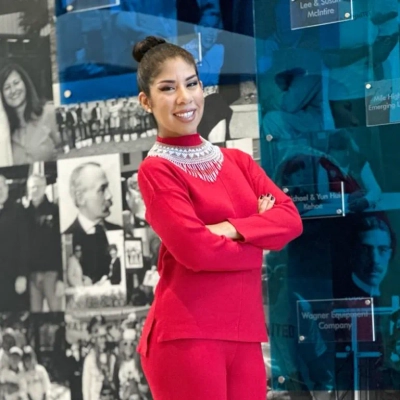
Social proof worked best when it came from peers rather than testimonials that sounded polished. At MacPherson's Medical Supply, one effective example was highlighting short quotes from discharge planners and home health nurses in local ads, paired with a single concrete outcome. Lines like "deliveries are on time and paperwork is clean" or "patients call us less after setup" carried weight because they spoke to operational relief, not marketing promises. Those quotes ran alongside simple data points such as average delivery turnaround or same day setup rates. Referrals increased because decision makers recognized their own pressures in the message. Families trusted it because professionals they already relied on were implicitly endorsing the service. Sales conversations moved faster since credibility was established before the first call. The approach worked because it reflected reality without exaggeration. Familiar voices describing specific results felt believable, and that belief translated into action.

Showcase Recognizable Brands with Case Studies
Client validation is the ultimate sign of credibility, which is why we prefer using client logos and case studies as social proof. We've posted multiple authentic testimonials paired with recognizable brand names to show our audience what we can do. When prospects see that respected companies trust your services, it reduces friction and shortens the decision-making process. We've seen how advertisements that clearly showcase credibility and trust signals can drive significantly higher engagement than just feature-focused messaging.

Share Candid Event Moments to Reassure
Social proof works best for us when it's captured in real moments rather than staged for ads. As we run live, in-person dating events, we have countless natural opportunities to take photos and short videos of people arriving, interacting and enjoying themselves. The most effective social proof we have found is simple, authentic content, candid clips, group photos and short reactions from attendees. When we have tried the polished testimonials these came across as staged and got far less engagement.
We also found using real event content in our advertising helps reduce anxiety for new customers because they can immediately picture themselves there. The biggest impact hasn't been higher click-through rates alone, but increased confidence and conversion once people land on the site.
Founder, True Dating

Signal Authority through High Participation Counts
One of the most effective uses of social proof in our advertising has been showcasing the number of brands and SaaS companies that have earned placement in our comparison rankings. Instead of relying on testimonials, we highlight the signal of inclusion itself: how many companies qualify, how often our categories are updated, and how transparent the evaluation process is.
The most powerful form of social proof wasn't user reviews or case studies—it was volume-based authority. When visitors see that hundreds of companies participate in a ranking ecosystem, and that the lists are built on structured scoring rather than opinions, engagement rises sharply. Click-through rates increased the moment we began showing "Top 100," "Most Requested Tools," and "Founder-Verified Products" badges across ads and landing pages.
People trust what other people are watching. In our experience, crowd density outperformed quotes, reviews, and influencer endorsements combined. It reassures users that they're stepping into a space where the broader market has already cast a vote with its attention.
Albert Richer, Founder, WhatAreTheBest.com.

Highlight Thousands of Five-Star Reviews
Product reviews and User Generated Content (UGC) may be the easiest way to sell with social proof. I quote reviews and brag about the number of reviews often. I use callouts in headlines & descriptions on Google Ads & Meta Ads like "1000s of 5 Star Reviews" or quoting a specific review.
For some of my retargeting campaigns, review callouts make up the primary strategy for the bottom of my marketing funnel. A good review can help nudge users to finally make the purchase after they've viewed your product page.
While reviews may seem obvious, many small brands still don't have them at all or just haven't set up a review email workflow for their shop or Amazon store. It's massively important and can become a pipeline of great content for ads and marketing in general.
Certain apps, like reviews.io, can even generate graphics from your reviews, and any good email automation flow will ask the shopper to take a picture or video of their product.